



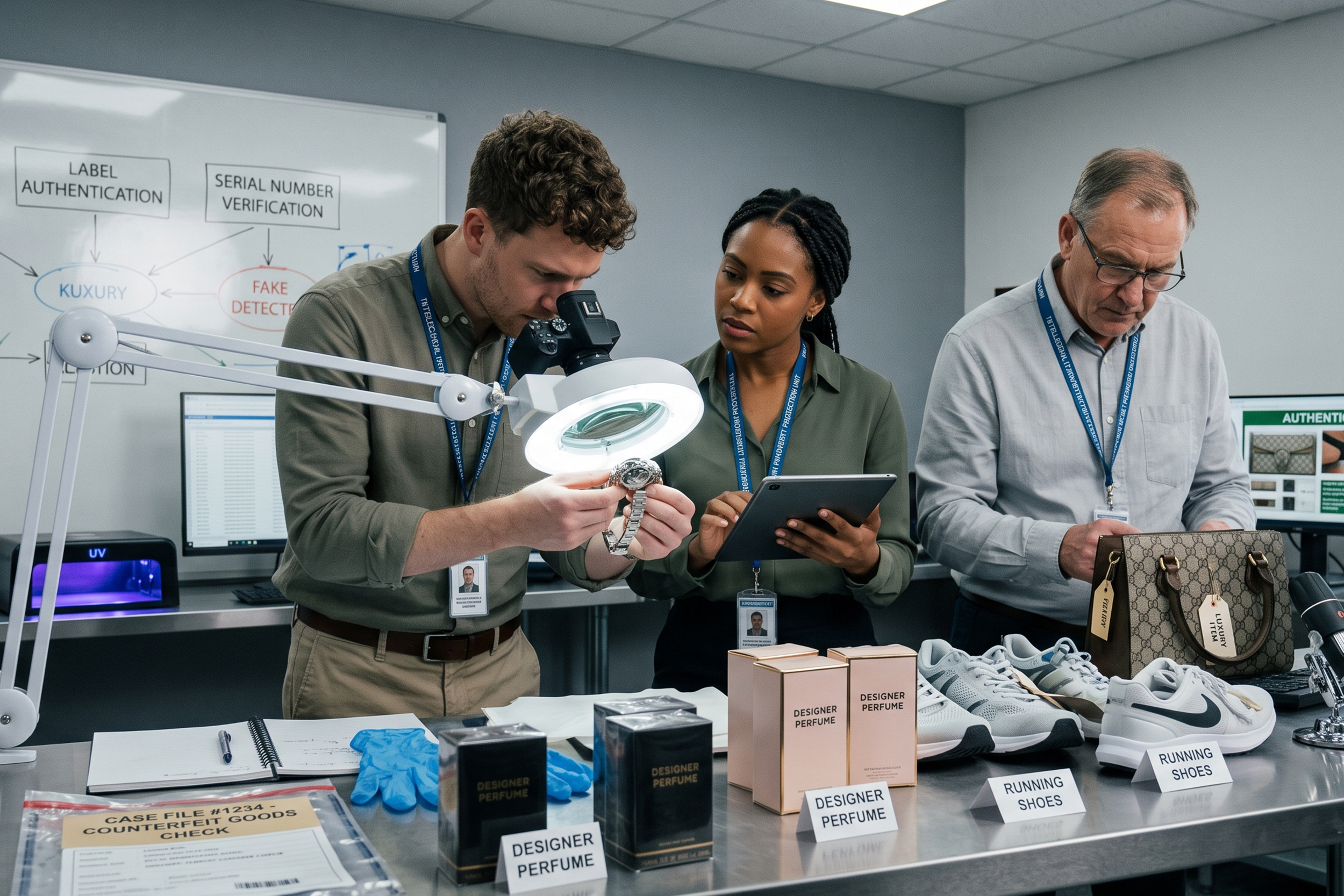
A customer sees an advertisement online. The colours match your brand. The tone sounds familiar. The offer feels right. The customer clicks, buys, and receives a product that is not at all yours.
This is no longer a rare event. It is happening across categories such as apparel, electronics, personal care, pharmaceuticals and FMCG, often without the brand knowing until the damage is already visible in customer complaints or declining sales.
Many organisations believe that counterfeiters are only interested in copying a product. However, counterfeiters usually spend more time studying a brand's advertising, packaging, pricing pattern and customer psychology than any legitimate competitor would. A competitor studies your product roadmap and pricing strategy to compete fairly. A counterfeiter studies the same brand to imitate it convincingly enough to be mistaken for the original, without matching the quality, safety or accountability behind it.
Brands that treat counterfeiting as a legal afterthought are already behind the sellers exploiting their campaigns in real time. Brand protection today is not only about confiscating the fake products. It is about protecting the trust that a brand has worked years to build.
This shift is important as it changes where brand protection efforts need to focus. A strategy built only around product authentication will always be a step behind a threat that is studying the brand's advertising, packaging and pricing psychology in real time.
What Counterfeiters Are Really Studying
When people think of counterfeiting, they usually picture a factory replicating a product, but that is only one part of the problem. The larger part is that counterfeiters keep tracking everything a brand puts out publicly, because that is where the brand's perceived value lives.
Advertising campaigns, packaging, social media presence, influencer content and even customer testimonials are all public information. Counterfeiters are not required to break into a company's systems to access this. They just observe the brand the same way a customer does, and then recreate the version of the brand that feels most convincing, at a lower cost and with no obligation to deliver the same quality.
This is why counterfeit products are rarely identical in composition to the original. What they consistently get right is the surface experience: the colour palette, the tagline structure, the packaging and the emotional promise the brand has built through its own advertising.
What Counterfeiters Copy First, and Why It Works
Visuals and Packaging
Counterfeiters prioritise the fastest recognition triggers first: placement of the logo, colour gradients, typography and packaging. These are the elements a customer notices in the first few seconds, even before checking the product itself. A brand's own festive or seasonal campaign visuals usually become the reference counterfeiters work from, as these are widely shared and are easy to access.
Tone and Messaging
Advertising language is another element that gets mirrored. If a brand consistently uses words like trust, heritage, purity or premium, counterfeit listings and packaging often adopt the same vocabulary. Customers associate certain words and tones with authenticity, and counterfeiters rely on this association rather than on the product's actual composition.
Pricing Positioned to Feel Like a Deal, Not a Warning
Counterfeit products are rarely priced at the lowest possible point. They are usually priced low enough to feel like a bargain but not so low that it raises suspicion. This pricing decision is based on a study of how the brand's own customers perceive value, and not just on the production cost.
Platform and Placement Mimicry
Counterfeiters usually place their advertisements and listings on the same platforms, categories and search terms that legitimate brands use, so that a customer searching for the real brand encounters the counterfeit as easily as the original. This requires an ongoing observation of where and how a brand advertises.
Fraudulent Websites and Domain Impersonation
Beyond individual listings, counterfeiters also study a brand's website design, checkout flow and domain naming pattern closely enough to build convincing lookalike websites. A domain that differs from the original by a single letter, combined with copied product photography and website layout, is enough to convince a customer they are on the brand's official site.
The elements copied most accurately are rarely the technical product specifications, but the exact visual and emotional cues a brand has spent years refining through its own marketing.
The Scale of the Problem in India
The extent of this issue in India is significant. Counterfeiting is an organised business. It is no longer an isolated activity carried out by small operators. Many networks have specialized roles for manufacturing, packaging, warehousing, logistics, online selling, and financial operations, allowing them to scale rapidly while reducing exposure.
According to a FICCI CASCADE report, the illicit market across five key sectors, including FMCG, alcohol, tobacco and textiles, was estimated at approximately Rs 7.97 lakh crore.
Industry body ASPA Global has noted that the counterfeit goods market represents an estimated 12 to 15 percent of India's total trade volume, growing at 15 to 20 percent annually, with India accounting for a substantial share of counterfeit goods seized across the Asia-Pacific region.
A 2025 consumer survey covered by BW Businessworld found that 89 percent of urban Indian consumers have purchased a counterfeit product at least once in their lifetime, and 31 percent reported encountering or purchasing counterfeit apparel within the past 12 months. The same survey found that consumers are willing to pay an average premium of 9 percent for guaranteed genuine products, rising higher in categories such as pharmaceuticals and agrochemicals. The willingness to pay more for authenticity is precisely the value counterfeiters are attempting to borrow through imitation.
What This Costs a Business
The consequences of this threat extend beyond a single counterfeit product being sold:
- Revenue Loss: Every counterfeit sale is a sale the legitimate brand does not make. Over time, this erodes market share in categories where counterfeit products operate at scale.
- Reputational Damage: Customers who unknowingly buy a counterfeit product experience the poor quality as if it came from the brand itself. Few customers distinguish between "fake" and "brand's fault" in the moment of disappointment.
- Erosion of Consumer Trust: Trust takes years to build and weakens as soon as the customers feel uncertain about what is genuine. This uncertainty affects even customers who have never personally encountered a counterfeit, once awareness of the problem spreads.
- Legal and Regulatory Exposure: In regulated categories such as pharmaceuticals and food products, counterfeit products can pose safety risks that create regulatory scrutiny for the legitimate brand, even though the brand had no role in producing the fake.
Why This Threat Is Growing
Several factors are accelerating this problem for both Indian and global brands.
E-commerce and social media have made it possible to create a fraudulent website or an impersonated account within minutes, without any physical infrastructure. A counterfeit operation that once required a factory and a distribution network can now run through a smartphone and a marketplace account.
At the same time, brands are producing more public-facing content than ever before, across more platforms, which gives counterfeiters a larger and more accurate reference to study from. Every campaign launched by a brand becomes a new reference for imitation as soon as it goes live.
The growing availability of low-cost design and content tools has also lowered the skill required to recreate a brand's visual identity convincingly. What once required a trained designer to replicate can now be approximated quickly, which shortens the gap between a brand launching a campaign and a counterfeit version of that campaign appearing in the market.
Use of AI in Counterfeiting
Counterfeiters increasingly use AI to produce convincing content. This has narrowed the gap between a counterfeit listing and something that looks legitimate at first glance, without requiring the design or writing skill it once took.
- AI-generated product images: Product photography that once needed a studio shoot can now be generated to closely resemble the brand's own catalogue.
- Fake reviews: AI-written reviews are used to simulate the volume and language of genuine customer feedback, making a counterfeit listing appear more trustworthy.
- AI-written product descriptions: Descriptions are generated to match a brand's tone and vocabulary, the same language patterns covered earlier in this piece.
Building a Brand Protection Strategy
Recognising the problem is only the first step. Organisations need a structured approach to protect their brand before the damage becomes visible.
- Continuous Online Monitoring: Brand protection starts with regular monitoring of e-commerce platforms, social media, search engines and marketplaces to identify the counterfeit products, impersonation accounts and fraudulent advertisements as early as possible. Early detection significantly reduces the window in which damage can spread.
- Intelligence-Led Investigation: Once a threat is identified, an intelligence-led investigation helps establish the scale of the problem, whether it is an isolated seller or part of a larger network, and gathers evidence that can support enforcement action. This moves an organisation from reacting to individual incidents to addressing the root causes.
- Enforcement Action: Identified threats need to be acted upon through takedown requests to platforms, coordination with marketplaces, and, where necessary, legal action against repeat offenders. Delayed enforcement allows counterfeit operations to scale before they are stopped.
- Aligning Marketing and Brand Protection Teams: Since counterfeiters study a brand's own marketing output, marketing and brand protection functions need to work together. Marketing teams are often the first to notice the unusual copies of their campaigns or unfamiliar accounts using brand assets, making close coordination between the two functions valuable for early detection.
Netrika's Approach to Brand Protection
We work with organisations to build a proactive brand protection framework rather than a purely reactive one. This includes continuous online monitoring across e-commerce, social media and digital marketplaces, intelligence-led investigations to identify counterfeit networks and unauthorized sellers, and coordinated enforcement action to have infringing content and listings removed.
With experience across FMCG, apparel, electronics and other consumer-facing sectors in India, we help organisations understand not just where counterfeiting is happening, but how closely their own advertising and packaging are being studied and copied, so that brand protection strategy can be built around the actual behaviour of bad actors rather than assumptions about them.
Conclusion
Counterfeiting has moved beyond copying a product. It now involves a close study of a brand's advertising, packaging, pricing psychology and online presence, often more closely than any competitor would bother to study it. The question is no longer whether your brand will be targeted, but whether you will detect the threat before it impacts your customers, revenue, and reputation.
A single counterfeit batch circulating unchecked for a few months can undo years of brand-building work, and no legal notice fully reverses that damage once customers have felt it. Organisations that treat brand protection as an ongoing, intelligence-led function, rather than a one-time legal exercise, are better placed to detect these threats early and respond before the damage spreads. The businesses that adapt fastest are those willing to look at their own advertising the way a counterfeiter would, and close the gaps before someone else finds them first.
Connect with our experts to strengthen your brand protection strategy to protect your brand’s long-term business value.
🌐 training.netrika.com | 📞 1800 121 300000 | ✉️ info@netrika.com