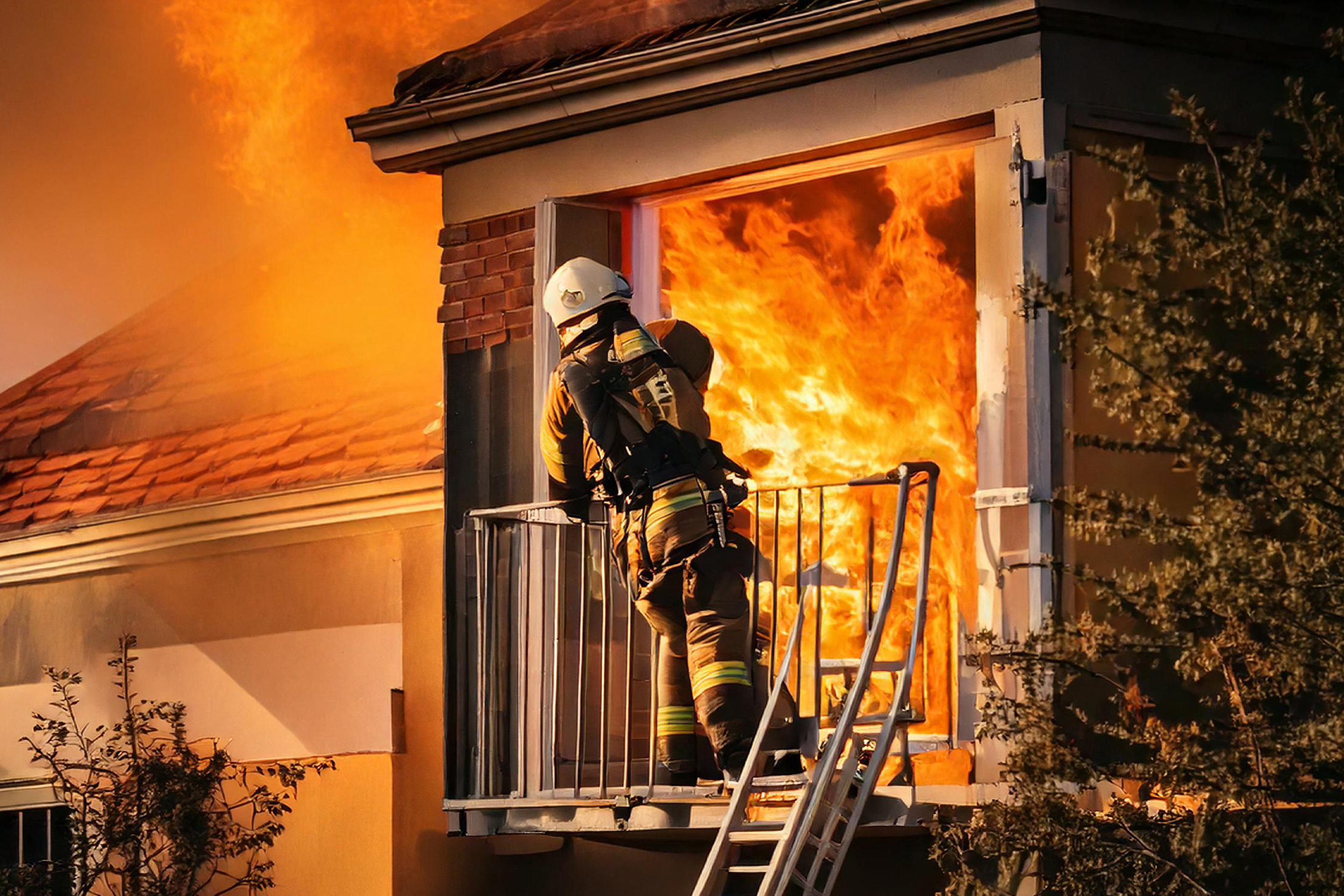
Six weeks. A series of devastating incidents across hotels, homes, pubs, and commercial buildings. Guests struggled to find their way out. Families were caught off guard while they slept. Celebrations turned into emergencies within minutes. Dozens of lives were lost. And each investigation exposed warning signs that had been visible all along.
INTRODUCTION
The recent fire incidents are not just becoming trending headlines, but a matter of concern for the entire country.
The National Crime Records Bureau (NCRB) cited about 5,971 fire accidents and 5,888 fire-related deaths in their latest available report. That accounts for about 16 fire-related deaths every day. The data further marks the continuity of destruction caused by fire across residential and commercial properties, factories, warehouses, hospitals, and hospitality facilities all over the country.
The situation is alarming, particularly in densely populated urban areas. Fire authorities in Delhi have reported a significant 10% rise in fire incidents during 2025, with residential properties accounting for a remarkable share of cases.
In continuation to this, the fire incidents reported from India in the last few weeks are not just misfortunes but appear to be cautionary messages. Even though the fire incidents were reported from different cities under varied conditions, there are still some patterns that have been noticed such as electrical faults and safety hazards.
The locations might differ, but the causes often resemble.
Recent Incidents and Key Takeaways
- Malviya Nagar hotel fire, Delhi (June 3, 2026): death toll has since risen to 23, including 14 foreign nationals, after another guest succumbed to injuries. The hotel had no fire NOC and was licensed for six rooms while running close to 25.
- Lucknow coaching centre fire, Aliganj, Uttar Pradesh (June 22, 2026):15 dead and several injured after a massive fire at the three-storey commercial building that was home to an animation/coaching center.
- Vivek Vihar fire, Shahdara, Delhi (May 3, 2026): 9 dead, including a toddler, after a suspected AC short circuit set a four-storey residential building ablaze at around 3 am.
- Govindpuri fire, Tughlakabad, Delhi (June 12, 2026): 3 dead, 2 critical, in an unauthorised residential building; one victim died after re-entering the blaze to search for his family.
- Mysuru resto-pub fire, Karnataka (June 15, 2026): 2 dead, 6 injured, after a suspected short circuit ignited a selfie LED booth inside a packed pub.
- Sector 119 high-rise fire, Noida, Uttar Pradesh (June 29, 2026): No casualties after a suspected AC blast sparked a fire in a residential flat. Six fire trucks were used, and the flames were controlled before spreading further to the rest of the building.
- Delhi alone recorded 65 fire deaths in the first half of 2026 and 543 since 2019.
The Root Causes of Repeated Fire Incidents

Generally, it is seen that all the major accidents have underlying problems of outdated clearances, overcapacity utilization, unchecked electrical load, blocked escape routes, non-functional fire alarms and sprinklers, and inadequate emergency planning. These are not minor mistakes but compounding risks that can delay evacuation, hinder rescue efforts and, in the worst cases, cost lives. The issue is not whether the property looks compliant on paper; the real issue is whether it is ready for emergencies.
The cost of discovering these gaps during a fire will be much higher than addressing them now. Speak to our experts before it’s late, click here.
The Hidden Cost of Fire Incidents: Beyond the Loss of Life
Loss of reputation and loss of life could be irrecoverable in cases like above. However, there are expenses that could be avoided, which do not often appear on the headlines. These include regulatory penalties, civil litigation, insurance disputes, loss of operating licences, reputational damage,and prolonged business shutdowns. In cases of hotels, hospitals, and businesses, the losses suffered by one incident would be higher than the cost of installing the right fire safety equipment.
Fire Prevention: What Responsible Businesses Must Do
Across all these incidents, safety gaps remain consistent. Addressing these does not require new technology. It requires structured and regular assessment. A few important measures that organizations need to prioritise include:
- Regular fire safety audits to identify gaps before they escalate into incidents
- Periodic electrical inspections to detect overload risks, faulty wiring or unsafe connections
- Emergency evacuation drills to ensure employees and occupants know how to respond during a fire
- Proper maintenance of fire extinguishers, alarms, sprinklers and other firefighting systems
- Accessible emergency exits, stairwells and evacuation routes at all times
- Updated documentation of inspections, approvals, audits and corrective actions, especially for regulatory review and post-incident assessment.
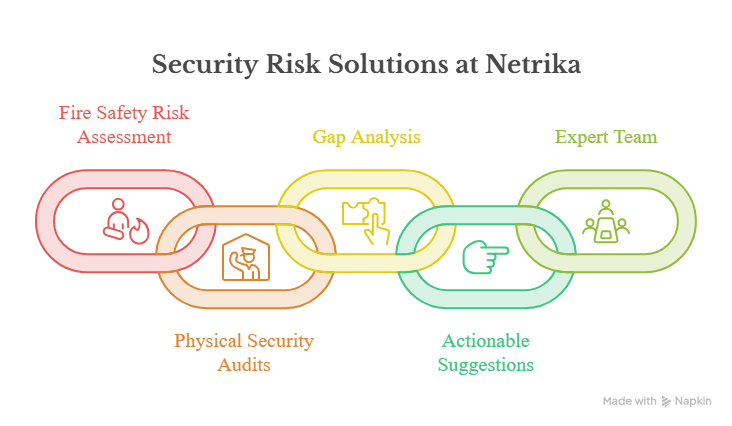
India's fire crisis is not a story about isolated accidents. It is a story about what happens when compliance is treated as a checkbox rather than a system. The incidents of the past few weeks are the latest in a long series that share the same root causes.
The question for businesses and property owners is not whether a fire could happen, but how prepared they are when it does.
Take the first step towards a safer workplace. Contact Netrika's security and risk consulting team today.
Visit: www.netrika.com/services/security-and-risk-consulting | Call: 1800 121 300000 | Email:trust@netrika.com
Sources & References Scroll to View